



STUDIES
Our User Experience Study
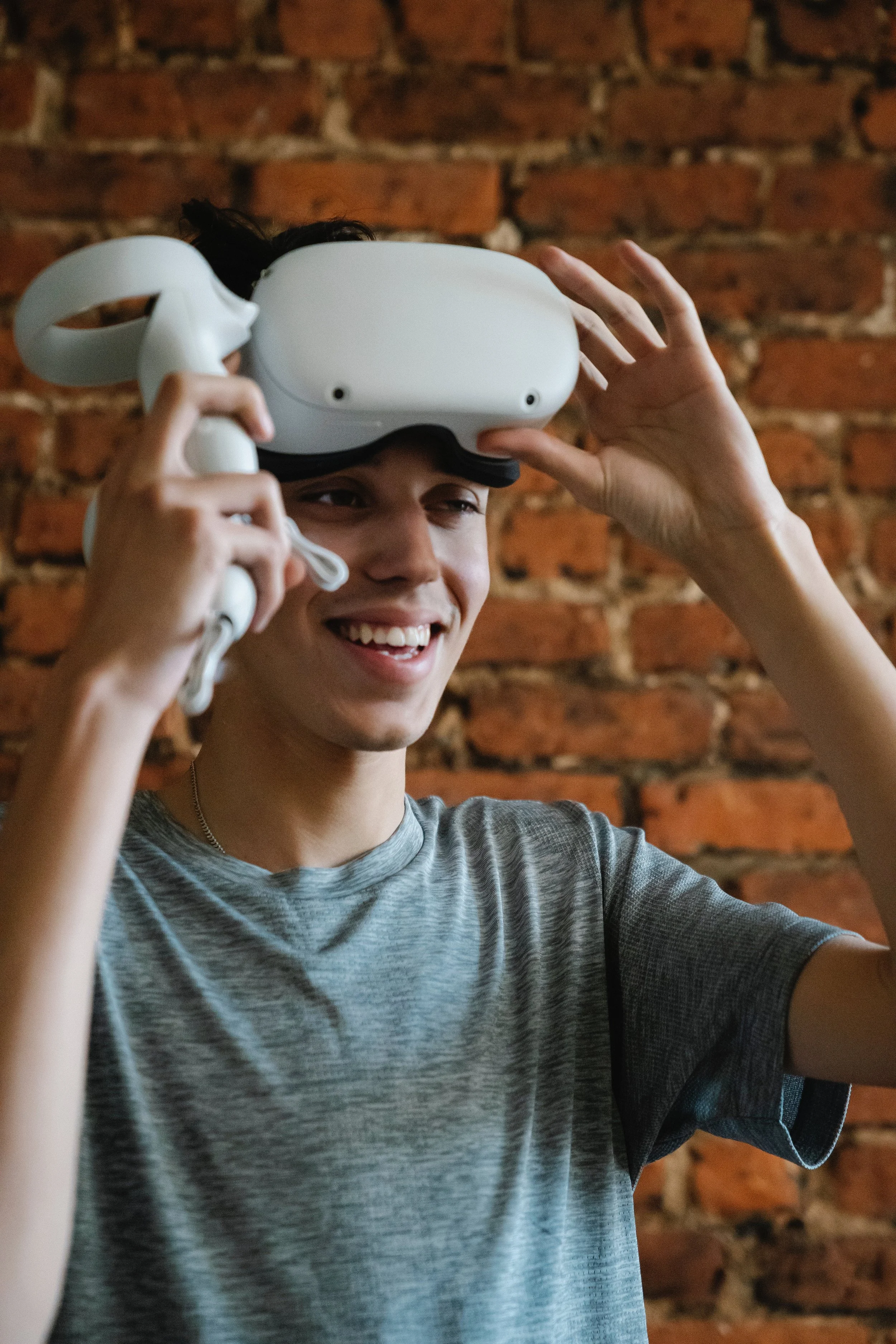
We believe that a scientific foundation is essential for all our products. That is why we conduct our own studies and incorporate their results into the development of our products. In our first study, we looked at how patients respond to using our VR application, teora® mind, after a stroke.
The study results show that treatment with head-mounted displays (virtual reality glasses) is well accepted, both by older adults in general and by stroke patients in particular. The positive attitude toward virtual reality therapy was observed regardless of previous contact with virtual reality.
Read the entire publication here:
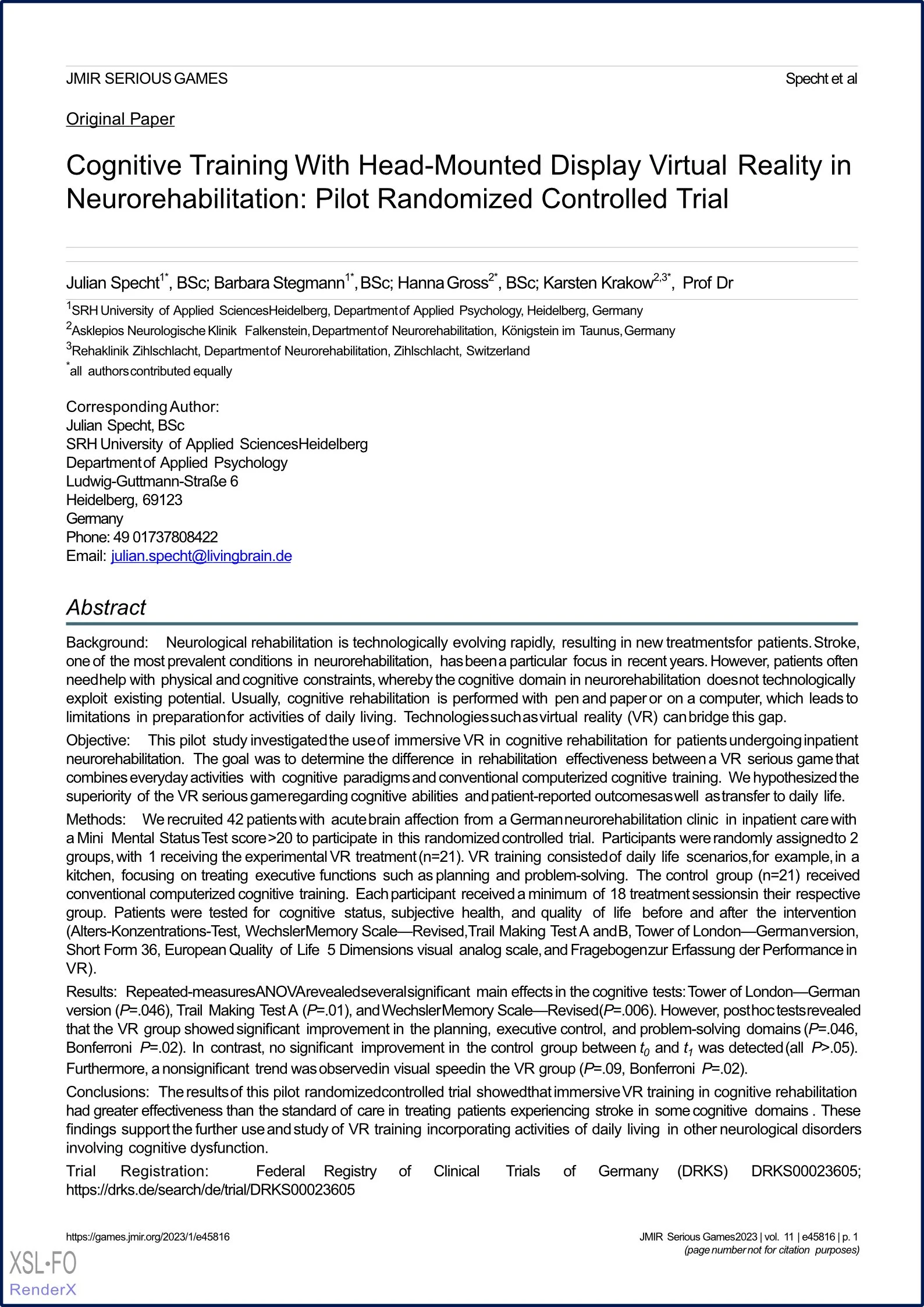
Clinical study: teora® mind outperforms standard therapy
A randomized controlled study was conducted to investigate the effectiveness of teora® mind. The treatment results of VR therapy with teora® mind were compared with those of the current standard treatment. The standard therapy currently consists of abstract exercises on a computer, in which, for example, patients have to arrange the steps for building a snowman in the correct order.
In the study, 42 stroke patients were randomly divided into two treatment groups: 21 patients received standard therapy, while 21 others were treated with teora® mind. Over a period of 4-6 weeks, they received an average of 18.7 treatment sessions of 30-45 minutes each. Changes in cognitive abilities were then measured: The VR group achieved significant improvements in executive functions, particularly in the areas of planning and problem solving. No improvements were observed in the control group receiving standard therapy. Both groups started at the same baseline level.
No serious side effects related to the device or procedure occurred during the study. In addition, the treatment was remarkably well received by both patients and healthcare providers.
The results suggest that immersive VR neurotherapy with teora® mind is a safe and effective treatment option for patients with cognitive deficits after a stroke.
The full study was published in the Journal of Medical Internet Research: Serious Games and can be viewed here.
We are already working on further research projects to improve our product and validate it in other areas of application. In addition, we are always on the lookout for innovative ideas and solutions.
Do you have an idea for a joint research project?
Feel free to contact us to discuss concrete implementation!
Our Study on VR and Mild Cognitive Impairment
Virtual Reality for Mild Cognitive Impairment - How Well Do Older Adults Embrace the Technology?
Until now, many people have primarily associated virtual reality (VR) with the world of video games. Yet this technology holds great potential for medicine: with a VR headset, users can immerse themselves in a calm, nature-like environment or specifically train their memory and concentration. This is particularly interesting for people with mild cognitive impairment - that is, early-stage memory loss that goes beyond the normal effects of aging.
One crucial question had long remained unanswered: Are older adults even open to using VR headsets? Or does the unfamiliar technology tend to put them off? This is precisely what a research team from the Central Institute of Mental Health in Mannheim investigated in a study that has been accepted for publication in the journal JMIR Aging. Our application, teora® mind, was used for the study.
Forty-nine older adults with mild cognitive impairment participated in the study. Participants were randomly assigned to either undergo cognitive training with teora® mind using VR headsets or, alternatively, immerse themselves in a relaxing natural landscape within teora® mind. Both groups used Meta Quest 3S VR headsets, which require no complex additional technology. Before and after the experience, researchers recorded how the participants felt about the technology, how they perceived the experience, and whether they felt nauseous or dizzy - a well-known phenomenon in VR known as “cybersickness.”
The results are encouraging. After trying it out, the participants had a significantly more positive attitude toward VR technology than before: their initial skepticism gave way to a more open, friendly attitude. The experience itself was generally perceived as pleasant. And although nausea is a recurring issue when wearing VR headsets, no one except for a single person experienced any significant discomfort.
Another finding is particularly revealing: The research team had suspected that people with more severe memory problems or feelings of depression might have greater difficulty with the new technology. This assumption was not confirmed. Neither weaker cognitive abilities nor a low mood stood in the way of a positive reception of the VR headset. This means: VR is apparently also suitable for people for whom one might initially have expected obstacles.
However, a difference emerged between the two applications: the relaxing natural landscape was slightly better received than the demanding cognitive training with teora® mind. This is hardly surprising - relaxation is easier than exertion - and it also points to where cognitive VR training can be made even more pleasant and inviting.
The study’s conclusion is encouraging: Virtual reality is well-received by older adults with mild cognitive impairment, even when memory or mood is affected. This lays an important foundation for using applications like teora® mind even more extensively in treatment in the future and designing them in a way that people enjoy using them regularly.
Read the entire publication here:
Further relevant studies on VR and medicine
In addition to conducting our own studies, we naturally always keep an eye on the latest scientific developments. You can find a selection of relevant studies on the use of virtual reality applications in the medical field below:
2022
He D, Cao S, Le Y, Wang M, Chen Y, Qian B. (2022). Virtual Reality Technology in Cognitive Rehabilitation Application: Bibliometric Analysis. JMIR Serious Games 2022;10(4):e38315. DOI: 10.2196/38315🗗
This bibliometric analysis of existing literature investigated how research on cognitive training with immersive virtual reality in a medical context has developed in recent years and came to the conclusion that the number of published works has grown rapidly and that effective treatment results can be achieved with VR.
2021
Jahn FS, Skovbye M, Obenhausen K, Jespersen AE, Miskowiak KW. (2021). Cognitive training with fully immersive virtual reality in patients with neurological and psychiatric disorders: A systematic review of randomized controlled trials. Psychiatry Res. 2021 Jun;300:113928. doi: 10.1016/j.psychres.2021.113928. Epub 2021 Apr 6. PMID: 33857847 🗗
A systematic review of clinical studies that examined cognitive training in immersive virtual reality in patients with neurological and/or psychiatric disorders concluded that immersive VR has great potential in rehabilitation and treatment.
2021
Kang J, Kim N, Lee S, Woo S, Park G, Yeon B, Park J, Youn J, Ryu S, Lee J, Cho S. (2021). Effect of Cognitive Training in Fully Immersive Virtual Reality on Visuospatial Function and Frontal-Occipital Functional Connectivity in Predementia: Randomized Controlled Trial. J Med Internet Res 2021;23(5):e24526. DOI: 10.2196/24526🗗
This study investigated whether immersive virtual reality has an effect on the cognitive functions of pre-dementia patients. The results show that visuo-spatial abilities improved in the VR group compared to the control group. This was supported by increased connectivity in the relevant brain areas as measured by fMRI. In addition, VR had a positive effect on apathy, affect, and quality of life.
2020
Ansado et al. (2020). How brain imaging provides predictive biomarkers for therapeutic success in the context of virtual reality cognitive training🗗
Cognitive training in VR produces demonstrable changes in the brain, which can also be detected using specific biomarkers and may have predictive value.
2020
Lee, C.-H., Kim, Y.-S., Jung, J.-H. (2020). Effectiveness of Virtual Reality based Cognitive Rehabilitation on Cognitive Function, Motivation and Depression in Stroke Patients🗗
Cognitive rehabilitation using virtual reality in patients after subacute stroke has a more positive effect on cognitive function and motivation than conventional cognitive treatment approaches.
2020
Liao et al. (2020). Using virtual reailty-based training to improve cognitive function, instrumental activities of daily living and neural efficiency in older adults with mild cognitive impairment🗗
Immersive VR combined with physical activity has a positive effect on a range of cognitive abilities in older people with mild cognitive impairment. The positive effects of VR and physical activity were significantly better than those of computer training.
2020
Pedro Gamito, Jorge Oliveira, Catarina Alves, Nuno Santos, Cátia Coelho, and Rodrigo Brito (2020). Virtual Reality-Based Cognitive Stimulation to Improve Cognitive Functioning in Community Elderly: A Controlled Study.Cyberpsychology, Behavior, and Social Networking. Mar 2020.150-156🗗
Immersive virtual reality, which is based on ecologically valid training environments, improves cognitive functions in older people and also has a positive effect on psychiatric parameters.
2020
Thapa et al. (2020). The Effect of a Virtual Reality-Based Intervention Program on Cognition in Older Adults with Mild Cognitive Impariment – A Randomized Control Trial🗗
The results of this study demonstrate that VR-based cognitive training has a positive impact on cognition in patients with mild cognitive impairment, with notable improvements in executive functions and certain physical abilities. Brain activity (as measured by EEG) also showed positive changes in attentiveness during VR training.
2013
Grewe et al. (2013). Learning real-life cognitive abilities in a novel 360°-virtual reality supermarket- a neuropsychological study of healthy participants and patients with epilepsy🗗
A 360° VR environment of a virtual supermarket produced learning effects (visuospatial, strategic, verbal) in epilepsy patients. VR is suitable for training everyday activities in epilepsy patients and healthy individuals.
2013
Nudo, R.J. (2013). Recovery after brain injury-mechanisms and principles🗗
Targeted and intensive rehabilitation after an injury to the nervous system is important and effective in order to benefit from biological principles in the rehabilitation process.



Keep in touch
Products
Science & Technology
Contact & Help
Copyright 2026 | living brain