



SUCCESS STORIES
Every journey begins with a personal story. Here, we’d like to share Karin's story.
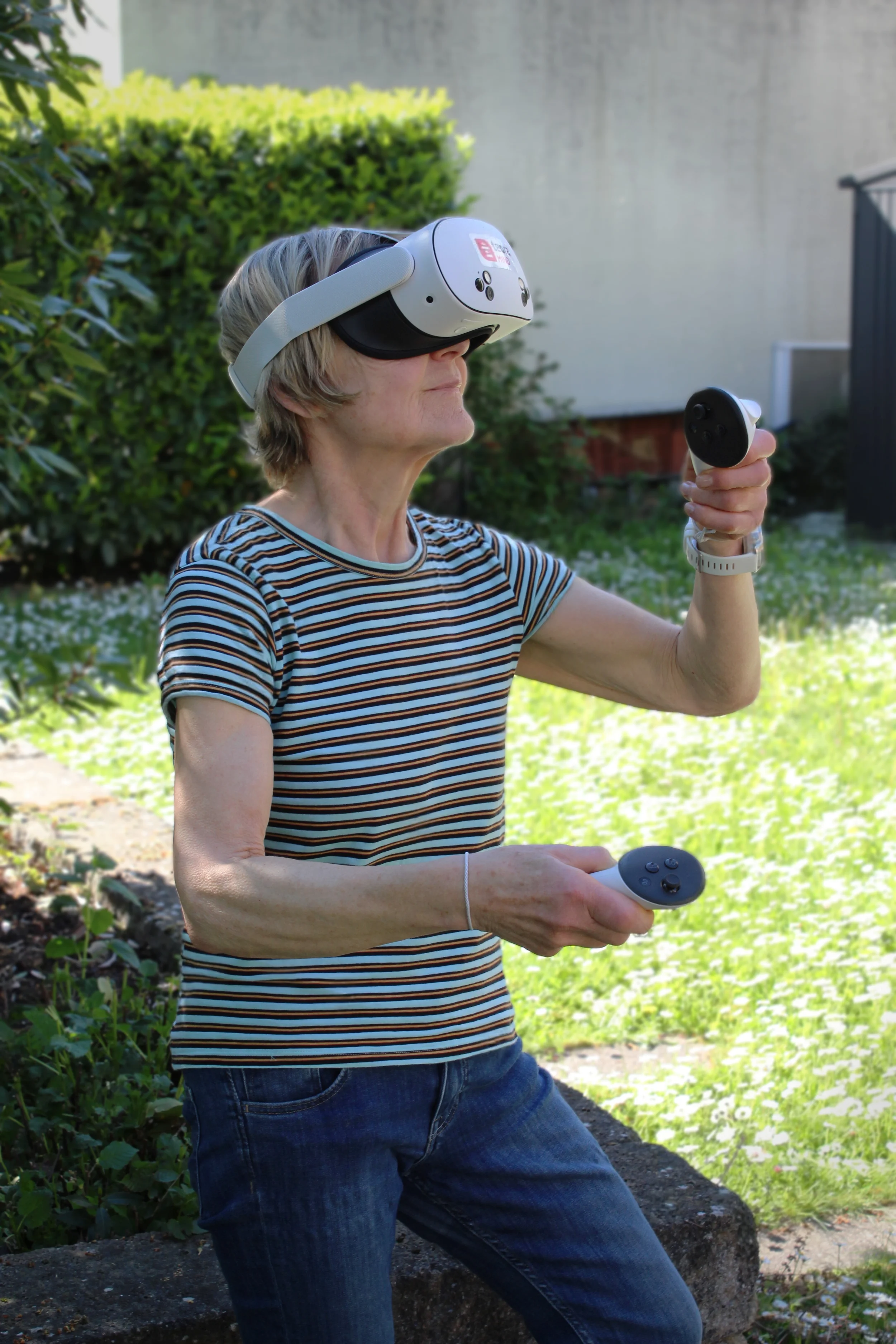
An aneurysm - and the journey back to life
Before her aneurysm, Karin was an active and independent woman who managed her daily routine with ease and lived her life on her own terms. In February 2025, however, a ruptured aneurysm changed everything overnight. Following emergency surgery at Kopfklinik Heidelberg University Hospital, a stay of several days in the intensive care unit, and an epileptic seizure, she began a long journey back to her everyday life. In the weeks following her hospital stay, she suffered from severe physical weakness, balance and walking difficulties, as well as cognitive impairments. Particularly troublesome were severe “brain fog,” memory problems, and significant word-finding difficulties. Concepts and connections that had previously been taken for granted now had to be relearned in some parts. Even everyday tasks were difficult for her, and using her smartphone suddenly became a challenge. This was followed by inpatient rehabilitation as well as intensive speech therapy, occupational therapy, and physical therapy. With great discipline, she trained daily, both during therapy sessions and at home with traditional pen-and-paper exercises.
Karin's experience with teora® mind
Just one month after her aneurysm, she began using teora® mind for additional training. She found the virtual training environment easy to access and motivating, so she used the system regularly from the very beginning. She found it particularly positive that the training didn’t feel like traditional therapy, but was above all fun while simultaneously challenging her cognitive abilities. The varied exercises allowed her to specifically train her attention and memory. She reports a continuous improvement in her performance, to which she believes teora® mind has made an important contribution. Today, she has mostly returned to her normal daily routine. Only mild word-finding difficulties remain on occasion. Although she has successfully completed her rehabilitation, she continues to use teora® mind regularly – not only to maintain her abilities, but also because she finds the training enjoyable and rewarding.
We put people at the heart of everything we do. It is personal stories that strengthen us on our journey. Another story that inspired us is Frank's.
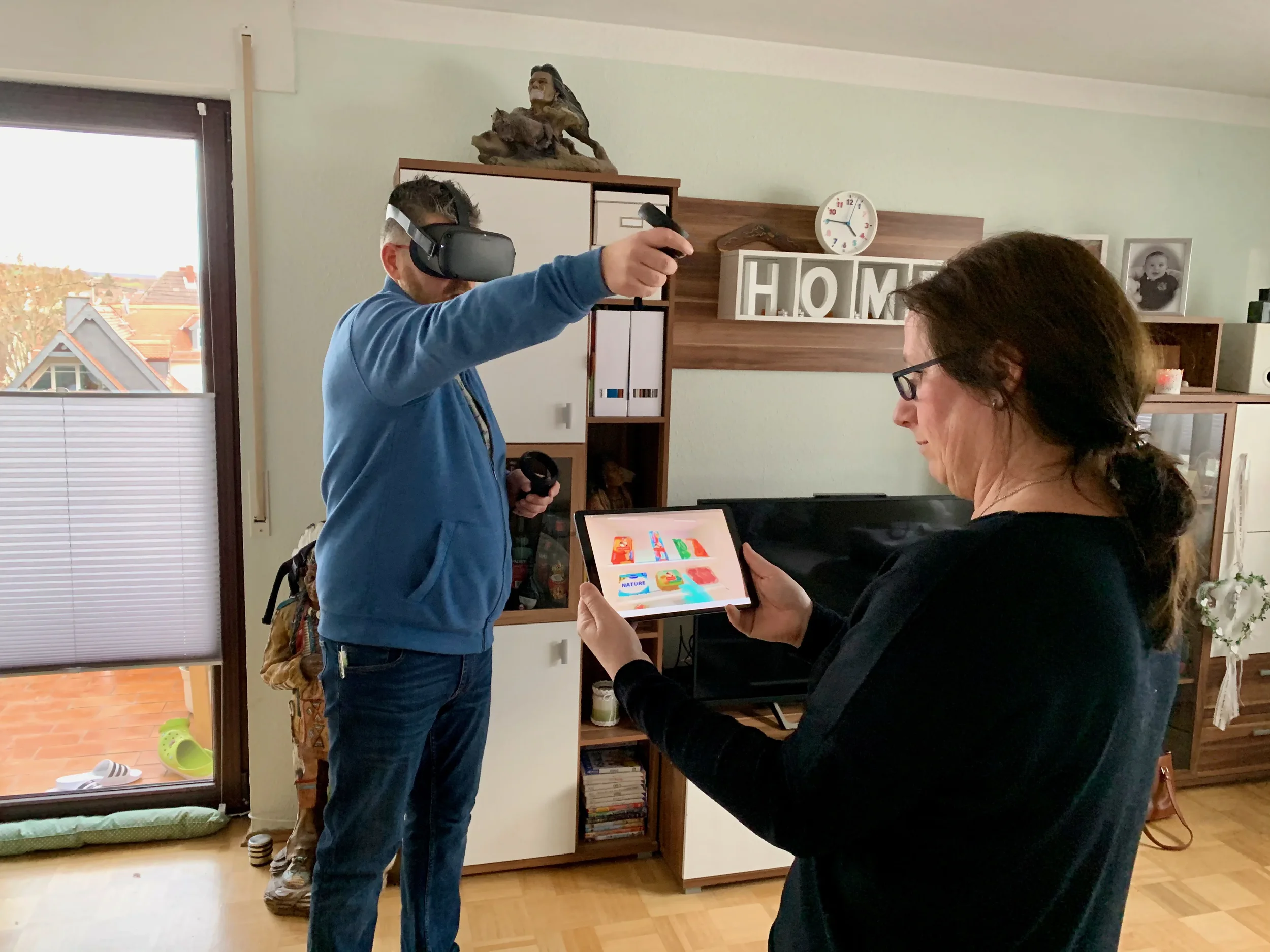
Living with anterograde amnesia
Frank, a 49-year-old father and husband, suffered cardiac arrest during a routine procedure. Since then, he has suffered from anterograde amnesia. This means that he is no longer able to create new memories. Even important emotional experiences are quickly forgotten. His brain constantly tries to make sense of his environment. This requires a considerable amount of energy and drains his attention span. Frank is no longer able to make plans. He cannot plan for the future. An ever-widening gap is developing in his identity, between who he used to be and who he is now. Although new experiences are a daily occurrence, they no longer become part of his personality. For Frank, time has stood still since his operation.
His neuropsychologist, Helene Schwarz, reported: "As he does not feel ill, it is particularly difficult to motivate him. Brain training does not fit into his self-image. Frank would need individual neuropsychological therapy, but outpatient care is inadequate. Neuropsychologists are few and far between. Some health insurance companies are not even aware that this field of expertise exists, nor do they know what can be achieved in this area. Frank's training potential is therefore not being exploited, and if he does not train, his cognitive performance will continue to decline. In addition, he rarely experiences success anymore. Although he cannot remember his failures, it is clear that he is no longer the cheerful person he once was. He is becoming increasingly listless. His family is suffering greatly as a result."
Frank's experiences with teora® mind
"VR glasses were a completely new experience for Frank. He is usually rather sceptical about computer-assisted training." Nevertheless, Helene Schwarz decided to use teora® mind in his therapy. "We didn't think he would be able to figure out how to use it. We thought he would be overwhelmed by the new environment and take the glasses off right away. But the opposite was true: Frank had a lot of fun trying things out in the virtual world. He coped well and was very focused – “in the zone”. He is usually extremely easily distracted. The application required attention and memory skills on the one hand and action planning on the other. We have rarely seen him so motivated since his illness. He was so happy about his successes and proud to have completed the level. He would have loved to continue playing."



Keep in touch
Products
Science & Technology
Contact & Help
Copyright 2026 | living brain